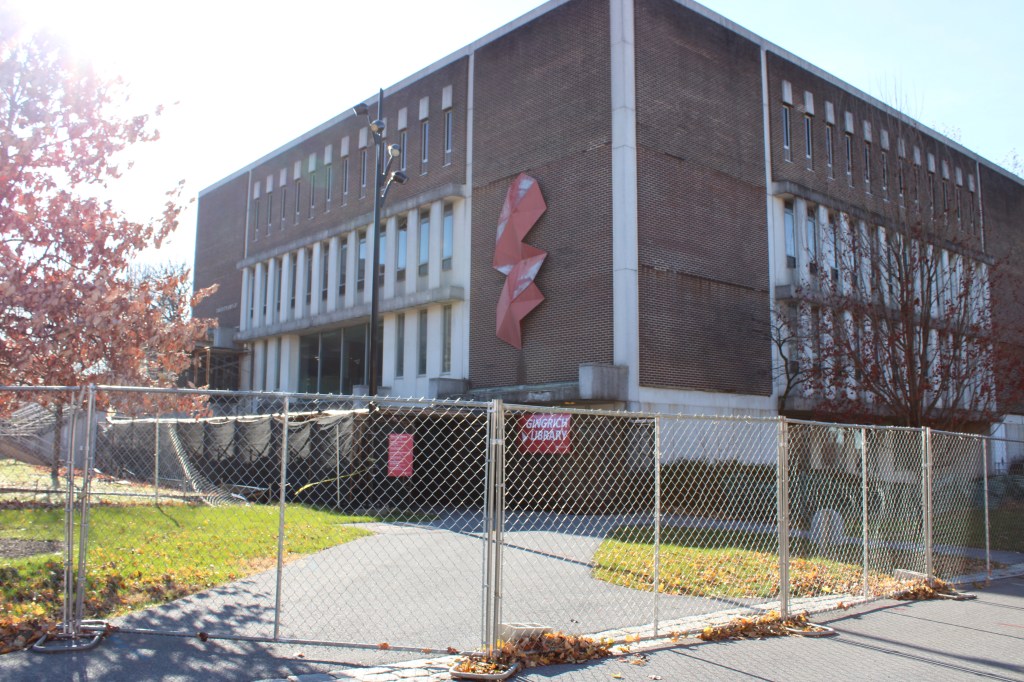
READING, Pa. — Albright College closed its Gingrich Library and Administration Building on October 19 due to deterioration of the façade of the building, according to an email sent out that night to students. The email explained that the building could prove a hazard to students with the potential of falling debris, especially in the winter months. As a result, many resources and offices were relocated to various parts of the campus and have had to deal with the sudden change of space and resources. However, the campus is coping with these new changes.
Karen Campbell, provost and Vice President for Academic Affairs at the college, explained that the brick facade of the building is growing unstable. “Nothing has actually become detached from the building, which is structurally sound other than the outer brick,” Campbell said. However, it was decided to restrict movement in and out of the building as a safety precaution while the façade is monitored.
The college has put together a library task force in order to address the issue, which Campbell is a part of. Their first meeting was November 13, where they assessed whether they want to renovate the current building or construct a new one and what would be needed and wanted in a new one. “In either case, plans will need to be made to remove and store the books and continue to provide other library services for students and faculty,” Campbell explained.
There were a variety of resources within the library and administration building. Since the building shut down on a weekend, steps had to be taken to make sure everything was up and running again in their new locations the following week. “The initial weekend of locating spaces into which we could relocate people and offices and resources was very busy,” Campbell said. However, with the help of facilities, Digital Strategy and Infrastructure (DSI) and public safety, they were able to get the departments settled by the end of the week. The facilities department helped with making sure spaces were ready and available for the new departments, DSI was in charge of moving technology from the building to their new spaces and public safety made sure that everyone was safe during this move, explained Campbell.
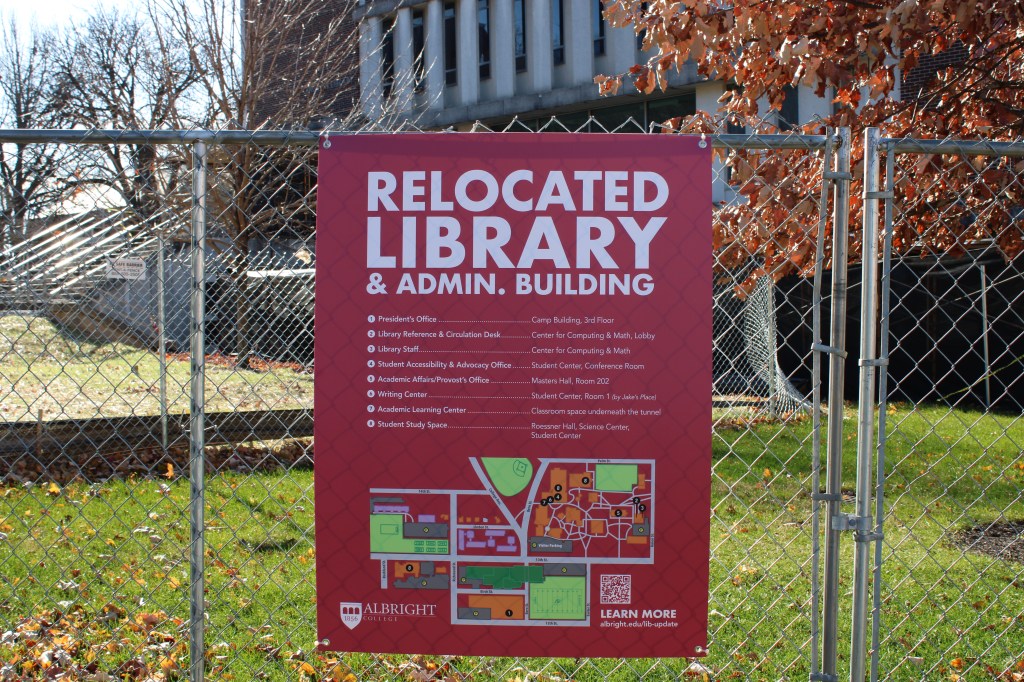
Among the resources displaced were the library staff and reference and circulation desk, the Writing Center and Academic Learning Center (ALC). The email sent to the students specified the new locations of these services. The Writing Center and ALC were located in the administration part of the building, below the library. The Writing Center has been relocated to Student Center Classroom 1 and the ALC to the classroom space underneath the tunnel on Bern Street. The library staff and reference and circulation desk were moved to the Center for Computing and Mathematics (CCM).
Sandra Stump, interim library director, explained that she’s known for years about the issues with the library, particularly the third floor. “You could see the cracks,” she said. “People had been looking at it and checking it on a regular basis, and from what I gather, internally the building was fine.” She agreed that it was the facade that was the issue.
Stump doesn’t know what is going to happen in regards to the collection. She knows that the school is exploring different options, with one being to find a space for a small portion of the collection and identify items that would go in that location.
Moving the collection brings more issues since it would be expensive to empty the shelving, Stump explained. It is cheaper to buy new shelving units. She also explained that libraries must be moved by a professional moving company to prevent losses and damages.
Although the collection is separated from the library staff, students can still request items, Stump explains. Students can place a hold on an item they want and it can be pulled from the building. There is also a sheet at the circulation desk in the CCM where students can note the items they want pulled. However, Stump said that it is easier for students if they use the online catalog to find items, login with their LionLink credentials and place a hold on the item.
Stump said that initially the library staff was allowed into the building for an hour twice a week in order to retrieve items. Now, they are allowed in less to remove more of the collection. They print out the material requests and go in to retrieve them. They are trying to arrange when they can go back in right now.
Stump doesn’t like how the staff is separated from the collection and how students can not study within the library. “I know how some students use the library, and even if they don’t have a definite need for something in the stacks, they still use it to study,” she said. She would like the library staff, collection and study space to be together. She believes that everything is too spread out now.
Writing Center Director Rachel Liberatore explained that there is a sense of uncertainty regarding the library building and what is to come. She wonders if everyone is getting the word on what is happening, news on current locations, as well as how long the library will be closed.
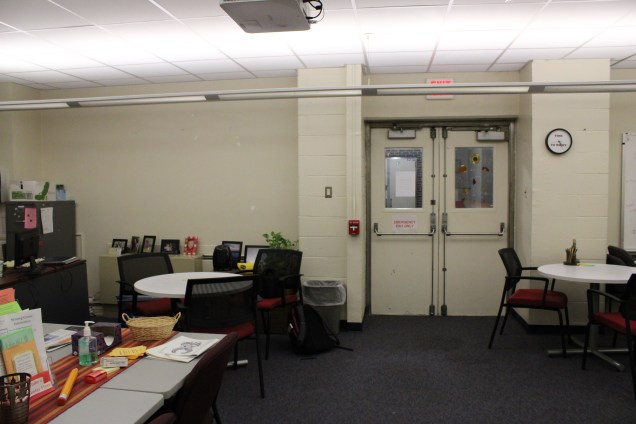
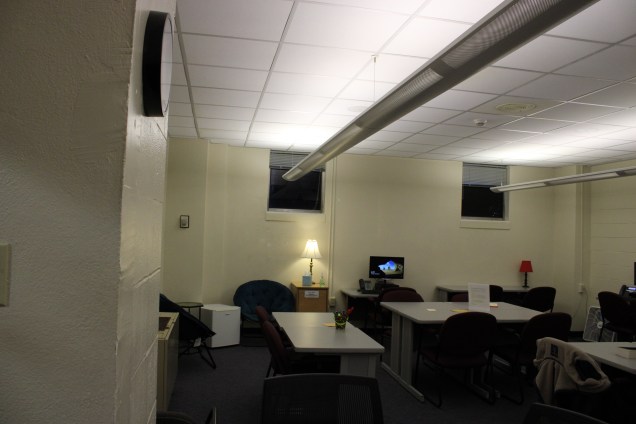
Liberatore said that the space the Writing Center has been relocated to is a good size, but it does have some issues. She does not have a personal office in the Campus Center Classroom 1 and the space is missing some ceiling tiles. Also, because the room is not soundproof, sound carries from both the tunnel outside and the campus center. Liberatore has been discussing solutions to these issues with the facilities department.
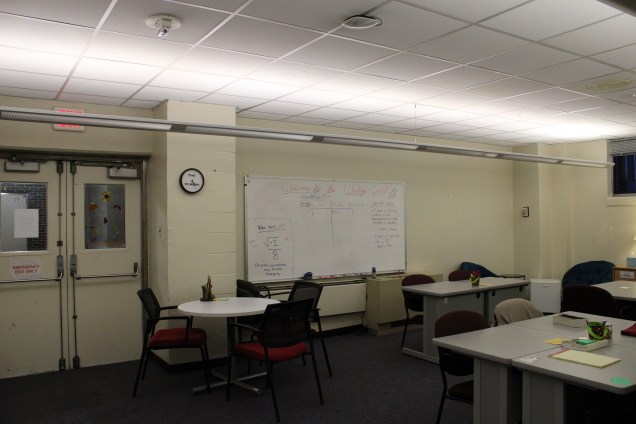
Liberatore is also a part of the library task force and agrees that it would be ideal to build a new library if the school could. “Realistically and financially, I don’t think building a new library will be possible,” she explained. “It’s going to depend on the finances.”
The college does know that they need to get a better elevator in the building to make it more accessible, Liberatore said.
ALC tutors do not have a set working space like the Writing Center tutors do. They tutor specific students in various subjects, while Writing Center tutors work with any student in First Year Seminar, English, communications and any other writing intensive course. ALC tutors pick areas on campus to work with their tutees in.
Tutor Manager Sarah Hohl and Tutor Gillian Umstead explained that the library was the general meeting point for tutoring sessions. Now that the library has closed they really see how other places on campus were not ideal. “Tutors are really finding trouble finding spaces with the least amount of distractions,” says Hohl.
Umstead said that places like the campus center and Jake’s Place had too many diversions. She noticed that her tutees were distracted by people going in and out and by other conversations. Umstead and Hohl agree that both the library and the tutoring lab, which was located below the library, were perfect quiet spaces with minimal distractions.
Hohl and Umstead agree that for the tutors to do their jobs well and for their tutees to succeed, certain concerns — such as safety and access to buildings — must be met. Hohl said that she liked how the library lights were always on at night, giving an extra form of safety. “Now that the library is closed, that area is really dark and feels unsafe to walk in at night.”
They both also want more accessibility to buildings so that there are more study spaces for students to work in and for them to meet with their tutees.
Lastly, Hohl and Umstead want more interaction with and information from administrators on what is happening in regards to the library and plans in place. They want to be able to relay that information to their tutees. They feel that if they are well informed, they can keep their tutees informed as well and help them focus more on and excel in their studies.

 Deborah Afolabi